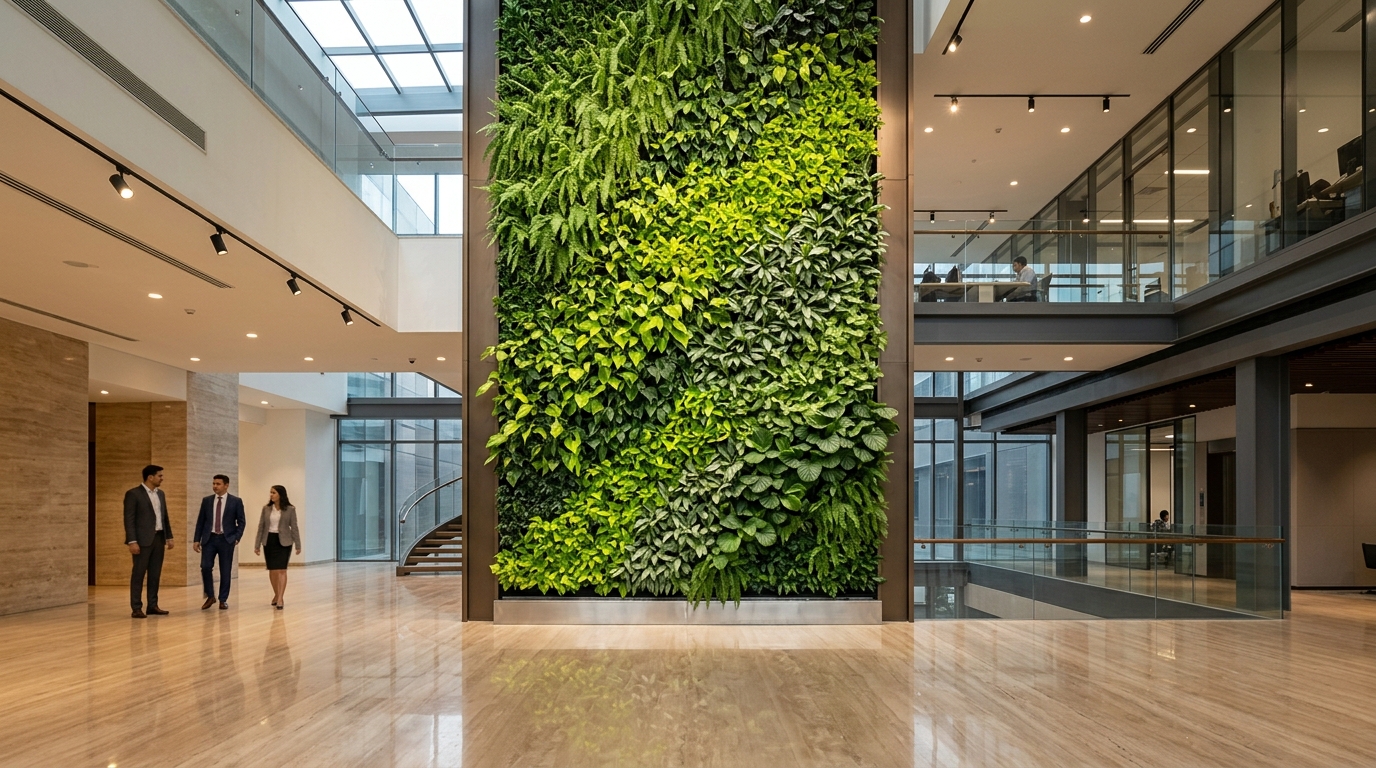
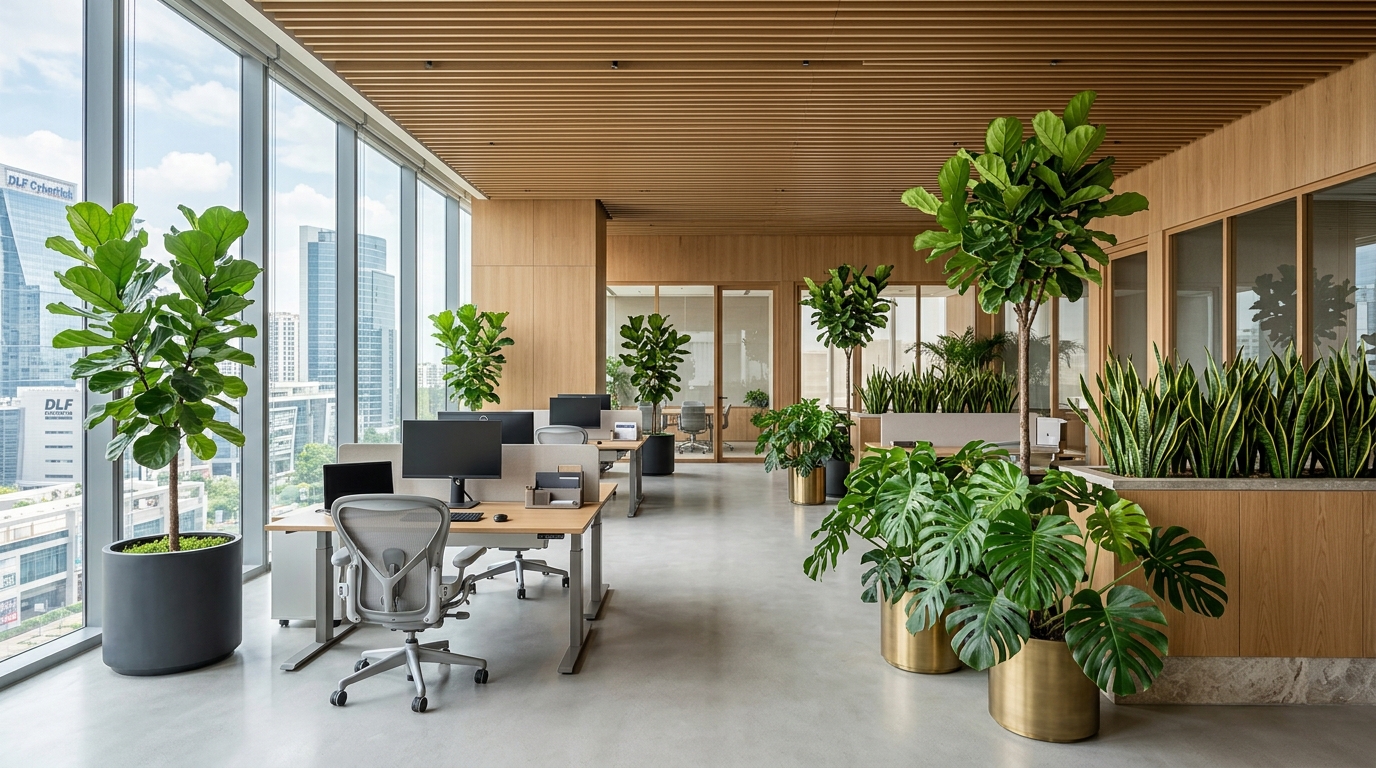
Almost every office planting scheme that dies does so for one reason: species chosen for a catalogue photograph, placed at a position that gets a fraction of the light the plant needs. A ficus two metres from a window and the same ficus beside a lift lobby are two entirely different propositions.
So we zone the floor before we specify anything. Light is measured at the planter position, not at the window, and each zone gets planting that will hold there — or a different solution where nothing natural will.
Most office planting in India is sold as rental, where the vendor keeps ownership and you pay indefinitely for something you never own. We work the other way round, and it changes what gets specified.
Replacement cover puts the risk of a bad specification on us, not on your facilities budget
Readings taken at each intended planter position across the floor plate, mapped to the zones shown above.
Species selected per zone, sized for the position and the ceiling height, with a stated expectation of how each will behave.
Finish, size and material chosen to sit with the interior scheme rather than fight it. Self-watering reservoirs where visit frequency makes them worthwhile.
Sourcing, acclimatisation and placement handled by our team, scheduled around your working hours and building access rules.
Watering, pruning, leaf cleaning, feeding and pest checks on a fixed visit cycle agreed at the outset.
Any planting that fails while under the maintenance contract is replaced by us at no additional cost.
A simple written record of each visit for facilities teams who need one for their own reporting.
A per-planter rate quoted over email is a guess. These are the things that actually change the specification.
Measured where the planter will stand. This is the single biggest determinant of what survives.
Heavily conditioned floors run dry and draughty. Several popular species will not hold in those conditions.
Corridors and lift lobbies need planting that tolerates being brushed past. Open floor positions do not.
Where our team draws water on each floor, and whether that is practical during working hours.
Entry procedure, permitted timings and whether maintenance must be scheduled outside office hours.
Finishes and palette, so planters read as part of the fit-out rather than something added afterwards.
Light readings, access, water points and a look at how each area is actually used.
Species, planters and positions issued as a line-item scope for sign-off.
Sourcing, acclimatisation and installation around your working hours.
Scheduled maintenance with replacement cover and a written visit record.
You own them. This is a purchase plus a maintenance contract, not a rental. If you ever end the maintenance contract, the planting stays with you.
Watering, pruning, leaf cleaning, feeding, pest checks, and rotating anything struggling into a better position. Visit frequency is agreed at the outset based on the size of the installation and how demanding the positions are.
We replace it under the maintenance contract at no extra cost. That is deliberate — it puts the risk of a bad specification on us rather than on your facilities budget, which is also why we insist on surveying light before quoting.
We would normally suggest twelve months, because planting needs a full seasonal cycle to establish and the value of a maintenance contract shows over time rather than in the first quarter. It is a suggestion, not a lock-in.
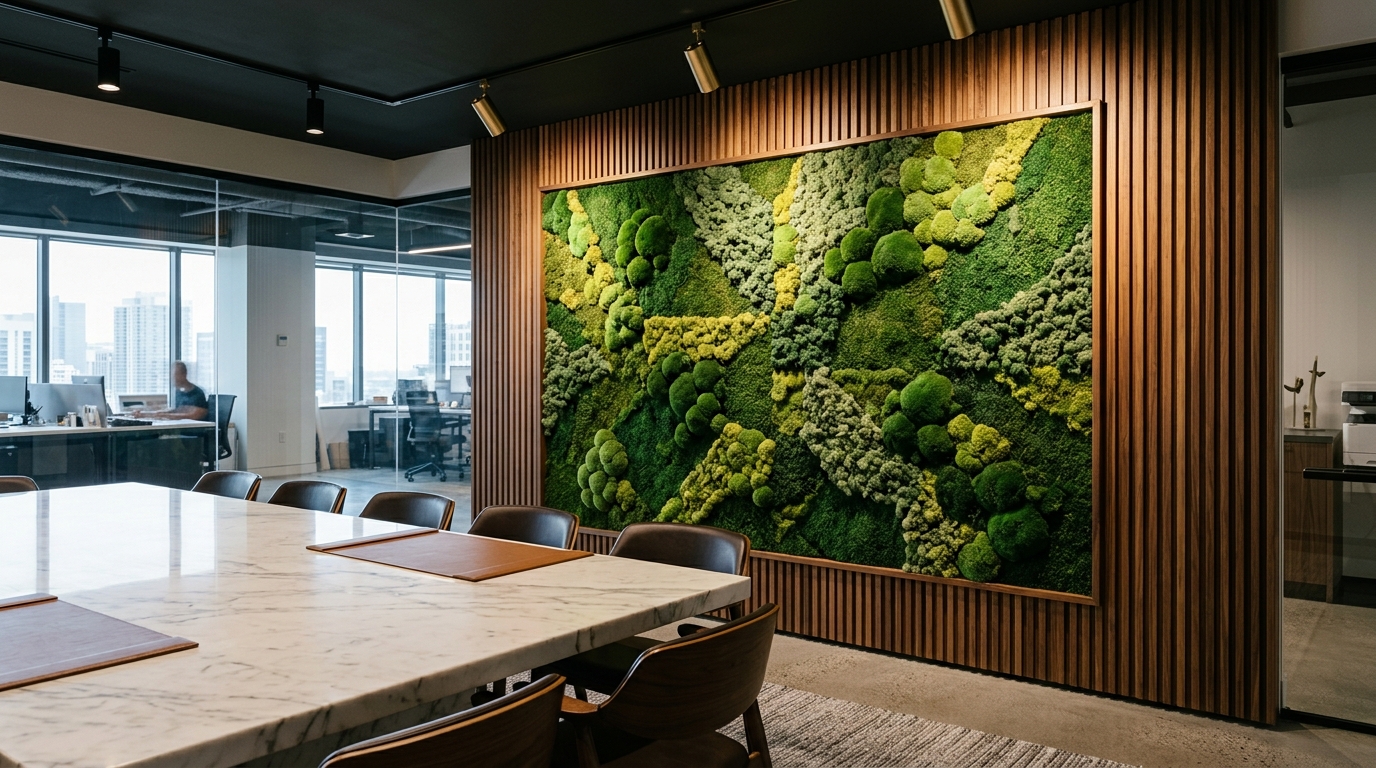
Yes, but not with ordinary planting. Core areas, internal meeting rooms and windowless corridors get preserved moss, preserved foliage, or planting supported by dedicated grow lighting. We would rather propose one of those than install something that quietly declines over six months.
Often, once we have seen it. We would survey the floor first and tell you honestly which existing planting is worth keeping and which is in a position it was never going to survive.
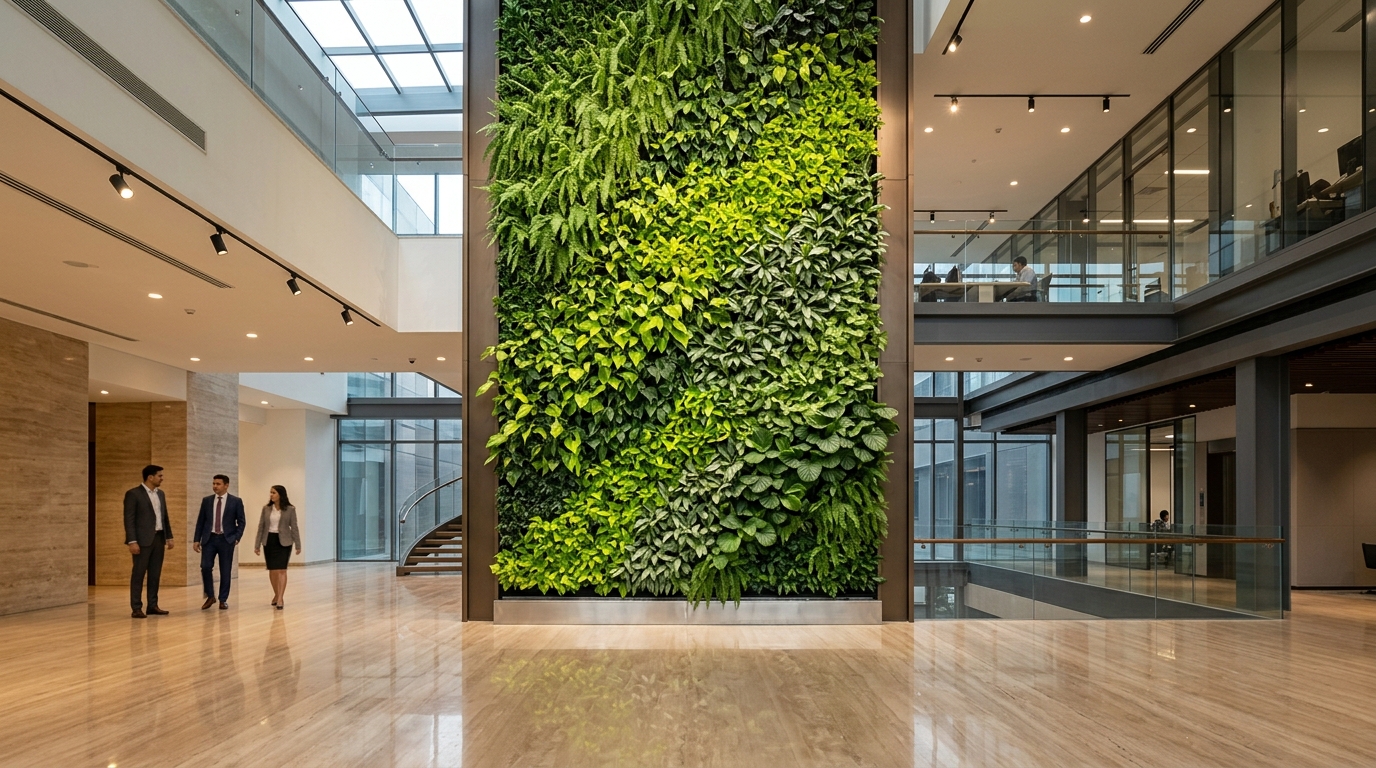
Send us a floor plan and we will come and take light readings. Surveys within Delhi NCR are free.