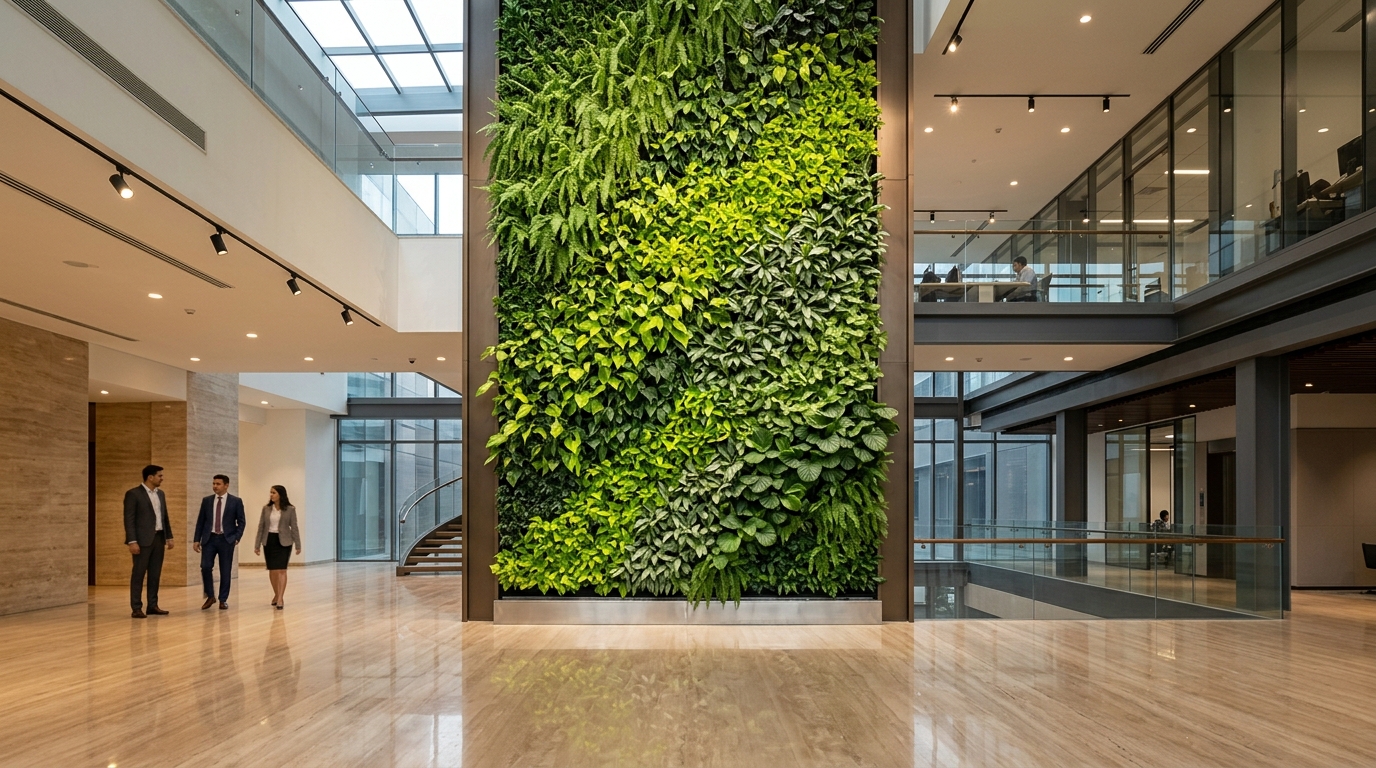
Run a single irrigation line down a three-metre wall and gravity does the rest. The top band dries out because water passes through before it saturates. The bottom band waterlogs because everything above drains into it. Within a season you get the classic failed-wall signature: brown at the top, root rot at the base, and a healthy strip in the middle that nobody planned.
The fix is not more water. It is zoning — independent lines by height, each on its own timer, each set to what that band actually needs. It costs a little more at installation and it is the difference between a wall that lasts and a wall that gets replaced.
Which one suits you is decided by light, water access and who will maintain it — not by budget alone. We will tell you on the site visit which of these your wall can actually support.
Living planting on a zoned irrigation system. The real thing, with the real requirements.
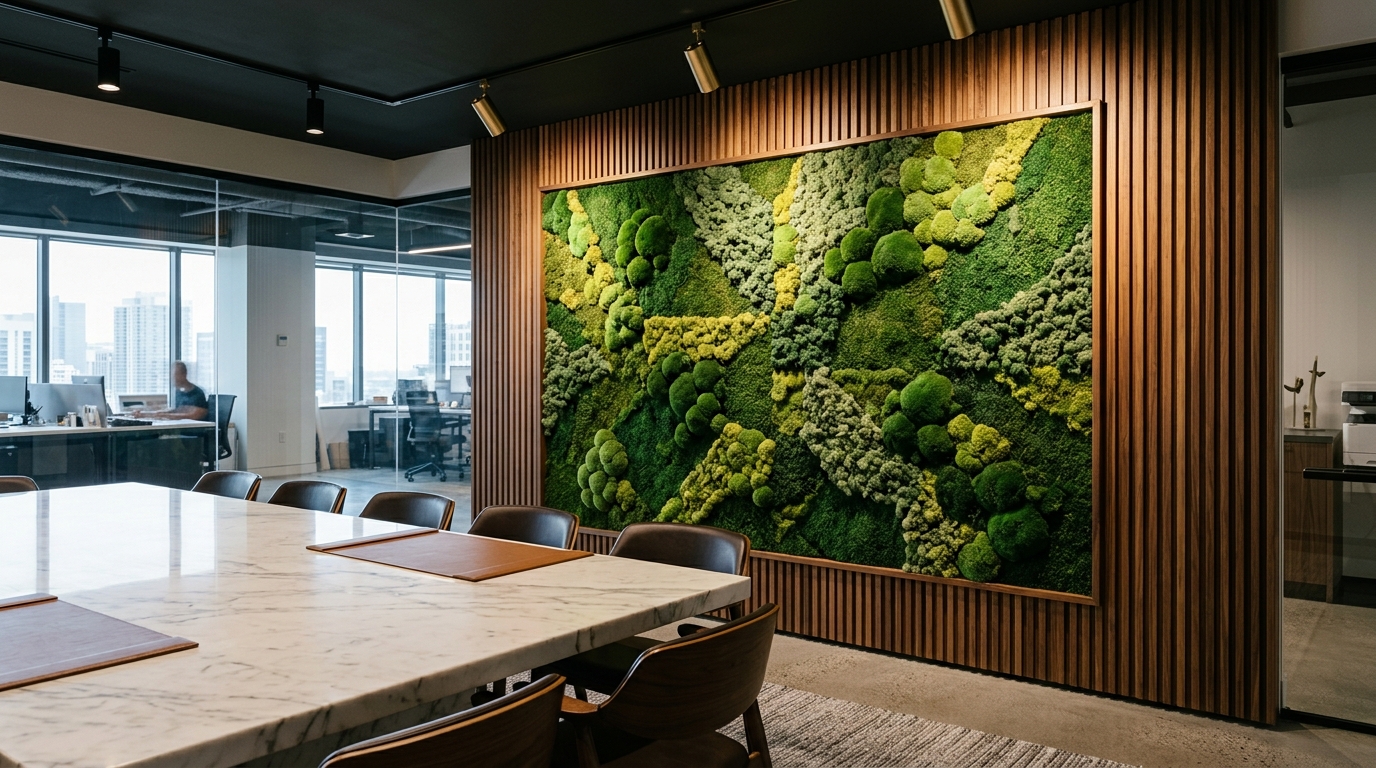
Live planting where light allows, artificial where it does not. Reads natural across the whole wall.
No irrigation at all. For basements, cores and any wall where a natural system would slowly fail.
Over three to five years, natural and artificial often land close on total cost — so decide on light and access, not on the install quote alone
Steel framing fixed clear of your wall, treated and finished, sized to the panel system and the substrate we are fixing into.
A backing sheet between frame and wall so your wall never sits wet. This is the detail most cheap walls leave out.
Felt pockets, modular trays or planter channels, chosen for the species and the orientation rather than for whatever is in stock.
Independent drip lines by height, each on its own valve and timer, with a filter and pressure regulation on the supply.
A channel at the base with a fall to an actual drain point — not a tray that someone has to empty.
Species selected for the measured light at that wall, and arranged so growth patterns hold the design rather than blur it.
Planned at design stage — how the top of the wall gets reached in year two, before it becomes somebody else's problem.
Per-square-foot rates quoted over the phone are how walls end up failing. These are the things that actually decide the design.
Measured at the wall face, not at the window. Most interior walls in India get far less usable light than they appear to.
A supply point and somewhere for the channel to discharge. Without both, a natural wall becomes a manual watering job.
What we are fixing into, and whether there is existing damp or seepage. A wall with damp needs fixing before anything goes on it.
For the timer and pump, and for grow lighting where light levels need supplementing.
How the upper zones will be reached. A wall nobody can service is a wall that dies quietly.
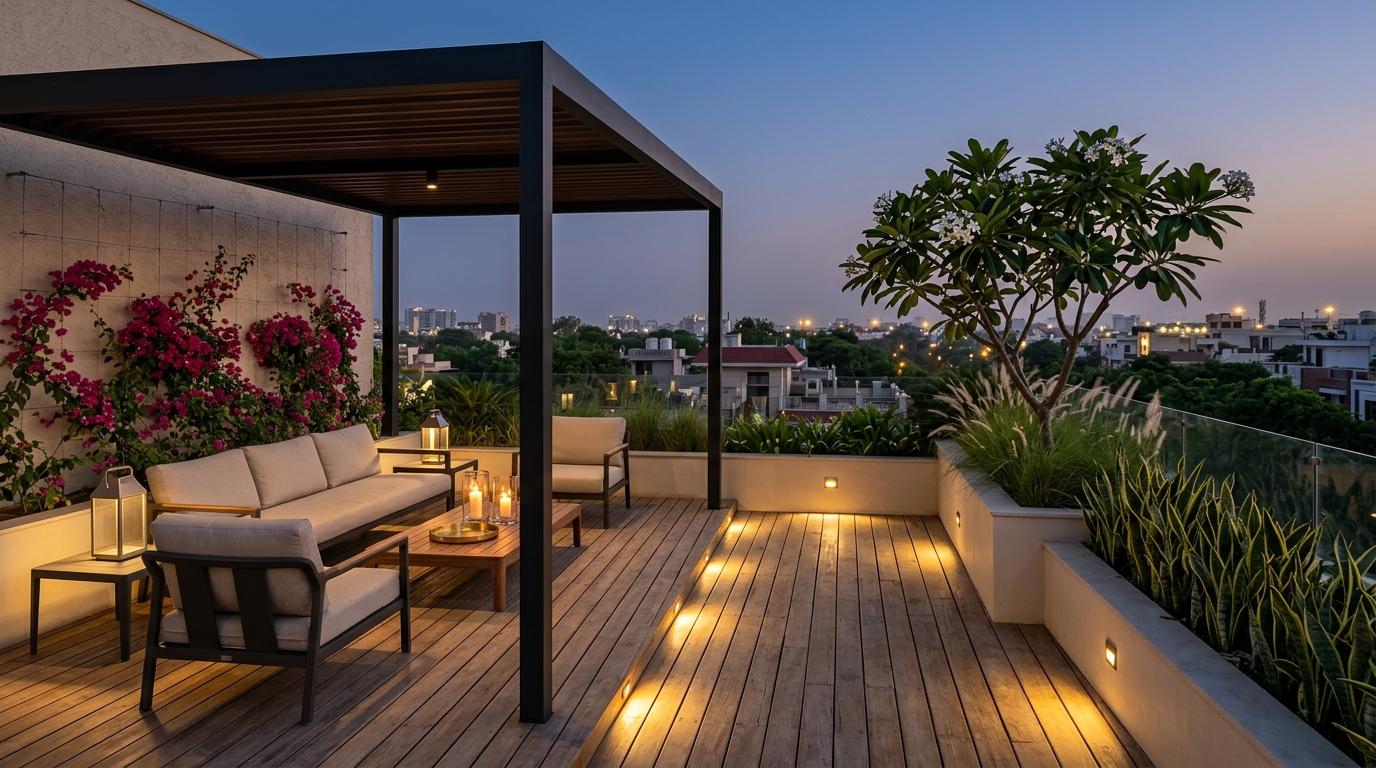
For façades — wind, direct sun and reflected heat off adjacent glazing, all of which narrow the species list considerably.
Light readings, wall condition, water, drain and power, plus how the wall will be serviced later.
Section, panel layout, irrigation zoning and planting schedule issued for sign-off before procurement.
Frame, backing, panels and irrigation commissioned first. Planting goes in last, onto a tested system.
Close attention through the first season, then a regular visit cycle once the wall has settled.
Not when it is built correctly. The frame stands clear of your wall, a waterproof backing sits between the two, irrigation is metered rather than flooded, and the base channel takes runoff to a drain. Damage happens on walls built directly against masonry with no backing and no channel — which is unfortunately common.
Sometimes, with the right species and often with supplementary lighting. But we would rather tell you a wall gets too little light than install a natural system that thins out over six months. In those cases a hybrid or artificial wall gives you the same look without the slow disappointment.
A natural wall needs monthly attention at minimum — running each zone and checking emitters, pruning to the design, replacing failures and clearing the base channel. Hybrid walls need roughly quarterly attention. Artificial walls need periodic cleaning and repasting only.
Short outages are absorbed by the growing medium. For longer or frequent outages we specify a controller with battery backup so the schedule is not lost, and size the medium so the wall can carry a day or two without irrigation.
Yes, and it is a different design problem — wind loading on the frame, direct sun, reflected heat off adjacent glazing and a much narrower species list. Exterior walls also need a genuine fixing and load assessment, not just a mounting detail.
Often, once we have seen it. We would survey the irrigation, the backing and the channel first. Sometimes the fix is straightforward zoning; sometimes the wall was built without a backing or a drain, and we will tell you honestly if that is the case.
Send us dimensions and a photograph. Site visits within Delhi NCR are free and carry no obligation.